
How much can the brain store before it fills up like a phone, laptop or external drive? The honest answer is strange: scientists can estimate brain memory capacity, but the brain does not store memories as simple files. It stores living patterns.
How much can the brain store?
How much can the brain store? The human brain is often estimated to have a memory capacity in the petabyte range, but that number should not be understood like the storage capacity of a phone, laptop or hard drive. A computer stores files as digital bits. The brain stores memory through changing patterns of activity and connection across living neural networks.
The most repeated modern estimate says the human brain may have a memory capacity in the petabyte range. One petabyte equals about 1,000 terabytes. That sounds like a storage device number, and that is exactly why it can be misleading.
The estimate became popular after research on synapses — the tiny connection points where neurons communicate. In one influential study, researchers found that synapses could have more distinguishable strength levels than previously assumed. More strength levels means more possible information states, which increases the theoretical storage estimate.
But this does not mean your brain has a folder called “childhood,” another called “songs,” and another called “math homework.” A brain is not a library of files. It is a living network that changes whenever you learn, sleep, pay attention, forget, imagine or remember.
The brain can probably store an enormous amount of information, often described as roughly one petabyte or more, but it does not fill up in the same way a computer does. Forgetting is usually not proof of low storage. It is often a retrieval, attention or optimization problem.
Brain memory capacity is usually discussed through neurons, synapses and the strength of connections between them. The human brain contains roughly 86 billion neurons, and those neurons communicate through vast numbers of synapses. When you learn something new, your brain does not simply add a file into a folder. It changes the way networks connect, respond and reactivate in the future.
The popular one petabyte estimate comes from research into synaptic information capacity. A petabyte equals about 1,000 terabytes, which makes the comparison impressive, but also easy to misunderstand. The brain is not a storage box that eventually becomes full. It is a living, adaptive system that constantly strengthens useful patterns, weakens irrelevant ones and reconstructs memories from cues.
86 billion
Estimated neurons in the human brain
1,000 terabytes
One petabyte, expressed as terabytes
4.7 bits
Estimated information per synapse in one study
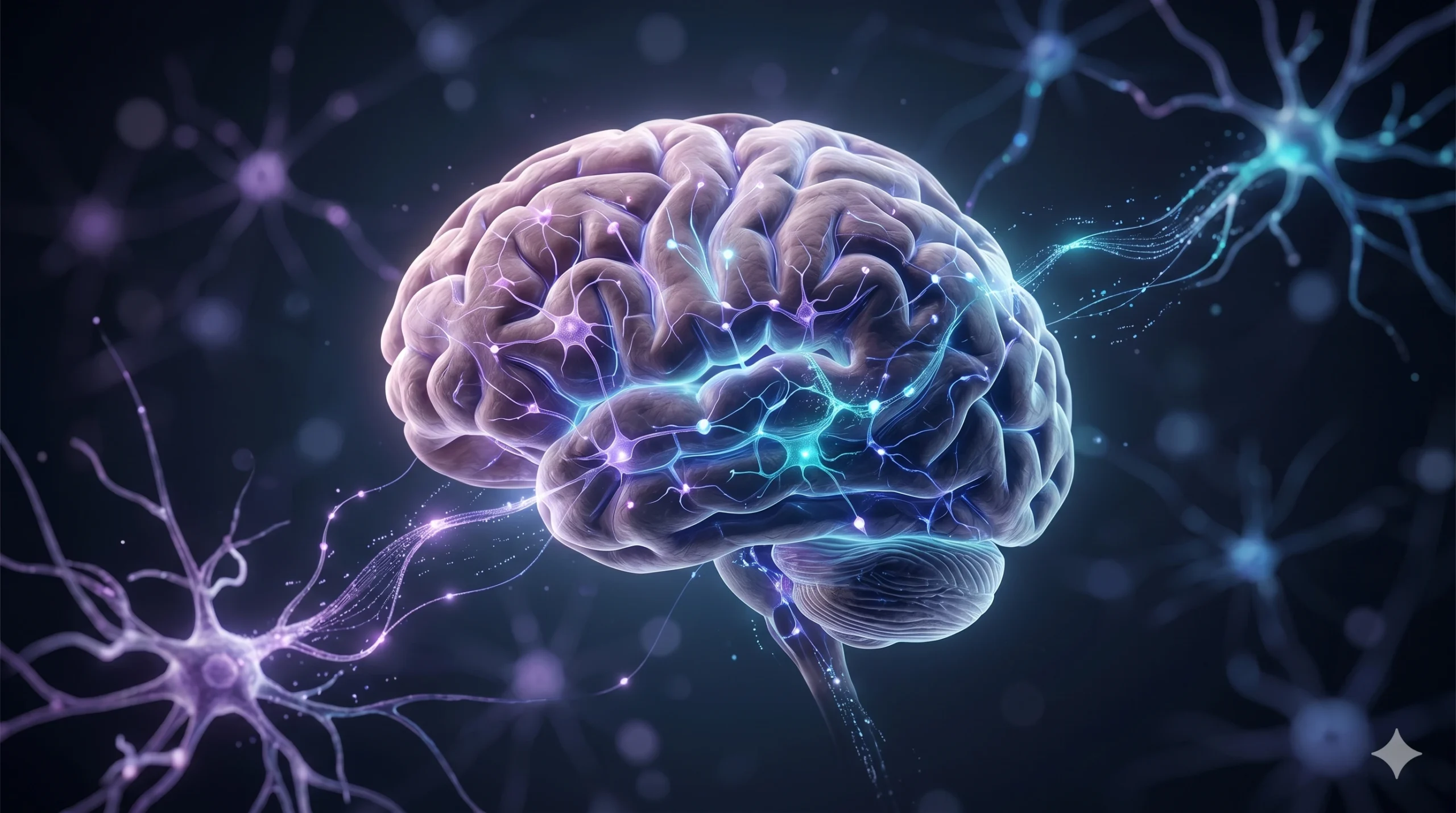
Brain memory capacity: what does one petabyte mean?
A petabyte is difficult to imagine. In computer terms, it is huge. In human terms, it is almost cartoonishly huge. That is why “one petabyte” works as a metaphor: it helps us feel the scale.
Still, the metaphor has limits. Digital files are precise. If you save a photo, the computer stores bits. If you copy the file correctly, the image stays identical. Human memories are not like that. A memory is not a perfect recording. It is a reconstruction created from stored traces, associations, context, emotion and expectation.
This is why two people can remember the same event differently. It is also why your own memory of an event can change over time. Your brain is not simply replaying the past. It is rebuilding the past from clues.
The better question is not only how much can the brain store, but how does the brain decide what is worth keeping? Attention, emotion, repetition, sleep and meaning all influence whether a memory becomes stable. Important events, repeated skills and emotionally charged moments are more likely to leave strong traces. Random details that do not matter may fade quickly.
Compare the scale
One petabyte as everyday storage metaphors
Static comparison of the one-petabyte metaphor (not how biological memory works):
-
500,000
HD moviesA rough comparison for one petabyte of storage, depending on compression and file size.
-
250 million
SongsMP3 songs, if each file is roughly 4 MB. Your brain does not store music this way, but the scale is useful.
-
250 million+
PhotosHigh-quality photos, depending heavily on resolution and compression.
-
Hundreds of millions
BooksPlain-text books. Again, this is a metaphor, not how memory works biologically.
-
~4,000?
Phone storageA 256 GB phone. One petabyte is roughly 4,000 times larger than 256 GB.
-
Network, not box
Real brain answerThe deeper point: memory capacity is not just storage volume. It is pattern formation, retrieval and plasticity.
The synapse is the key idea
Neurons communicate through synapses. When you learn something, networks of neurons change the strength and pattern of their connections. That means memory is distributed. It does not live in one tiny place like a saved file on a desktop.
A single memory may involve many brain regions. A smell can pull up a place. A song can pull up a person. A phrase can pull up a whole season of your life. That happens because memory is associative. It is built through links.
This is also why the brain can be incredibly efficient. It does not need to store every detail with equal priority. It stores meaning, patterns, emotional weight, predictions and useful cues.
| Digital storage | Human memory |
|---|---|
| Stores files as bits. | Stores patterns across changing neural networks. |
| Retrieves exact copies when the file is intact. | Reconstructs memories using cues, context and associations. |
| Runs out of space when storage is full. | Forgets, compresses, weakens or makes memories harder to retrieve. |
| Old files do not change unless edited. | Memories can change whenever they are recalled and reconsolidated. |
Quick question
Why do we forget if brain storage is so large?
Forgetting feels like failure. You forget why you walked into a room. You forget a name seconds after hearing it. You remember the tune of a song but not the title. It can feel as if the brain is badly designed.
But forgetting is not only a flaw. Modern neuroscience increasingly treats forgetting as an active and sometimes adaptive part of memory. A brain that remembered everything with equal intensity would not necessarily be better. It might be overwhelmed by noise.
Imagine opening your phone and seeing every notification you have ever received, all marked urgent. That would not be intelligence. It would be chaos. The brain needs relevance. It needs to weaken details that no longer help you predict, decide or survive.
Forgetting helps memory stay useful. The point of memory is not to archive life perfectly. The point is to help you navigate what comes next.
Three common reasons we forget
First, weak encoding. If you were distracted, tired or emotionally overloaded, the memory may never have been stored strongly. You cannot retrieve what your brain barely encoded.
Second, interference. New memories compete with older ones. Similar passwords, similar names, similar tasks and similar days can blur together because they share overlapping cues.
Third, retrieval failure. Sometimes the memory is not gone. The path to it is temporarily blocked. That is the classic “tip of the tongue” feeling: you know that you know, but the route is missing.
That difference matters. Forgetting does not always mean deletion. Sometimes it means inaccessibility. Sometimes it means the memory trace has weakened. Sometimes it means your brain decided that other information was more useful.
This is why forgetting does not always mean that a memory has been deleted. Sometimes the information was never encoded strongly enough. Sometimes a similar memory interferes with it. Sometimes the memory still exists, but the correct retrieval cue is missing. A smell, a song, a place or a phrase can suddenly bring back something that seemed lost.
Why the brain is not a hard drive
The hard drive comparison is useful for one thing only: scale. It helps us understand that the brain’s memory system is enormous. But after that, the comparison starts to break.
A hard drive separates storage from processing. A computer stores data in one place and processes it with another component. The brain does not divide the system so cleanly. The same network that stores a memory can also reshape it, connect it, weaken it and use it to guide behavior.
This is why learning changes you. It is not just adding a file. It is changing the structure and behavior of a network.
Memory myth check
Which statement is closest to reality?
- The brain records life like a camera. — Not quite. Some memory systems are very strong, but human memory is not a perfect recording device.
- The brain reconstructs memories from patterns. — Better. Memory is reconstructive. It uses stored traces, meaning, context and emotion to rebuild what happened.
- Forgetting always means deletion. — Too simple. Some memories weaken, but forgetting can also mean the memory is temporarily inaccessible.
Memory is also prediction
The brain is not trying to preserve every second of your life. It is trying to build a model of the world. That model helps you predict danger, recognize people, understand language, navigate spaces and make decisions.
From that perspective, memory is not just the past. Memory is a tool for the future.
So, can your brain run out of storage space? Not in the normal digital sense. Your brain can keep learning throughout life, although memory can be affected by sleep, stress, age, disease, attention and interference. The brain is not a hard drive. It is a living network, and networks do not simply fill up. They grow, prune, reconnect and adapt.
10 brain memory facts that make the 1 petabyte idea clearer
1. Your brain has about 86 billion neurons
The old “100 billion neurons” number is still common, but a widely cited estimate places the adult human brain closer to 86 billion neurons. The exact number varies between people, but the main point is scale: memory emerges from a vast network, not from a single storage chip.
2. Synapses matter more than neuron count alone
Neurons are important, but synapses are where much of the storage story becomes interesting. A neuron can connect with many other neurons, and learning changes those connections.
3. The petabyte estimate is theoretical, not a simple measurement
No scientist can plug a cable into the brain and read “1.0 PB available.” The estimate comes from models of synaptic information capacity. It is useful, but it should not be treated like a laptop specification.
4. Attention decides what gets encoded
You cannot remember everything you encounter because you do not encode everything deeply. Attention acts like a spotlight. What falls outside that spotlight may fade quickly.
5. Emotion can strengthen memory
Emotion tells the brain that something may matter. That is why embarrassing moments, danger, excitement and surprise can become unusually sticky.
6. Sleep helps stabilize memory
Sleep is not just rest. It supports memory consolidation, which helps transform fragile recent experiences into more stable long-term traces.
7. Recall can change a memory
Every time you remember something, the memory can become flexible again. That is one reason memory is powerful but not perfectly reliable.
8. Forgetting can be useful
Forgetting helps reduce noise. It can make the memory system more flexible by weakening details that no longer match your environment or goals.
9. The brain compresses meaning
You do not remember every word of every conversation. You remember the meaning, the emotion, the lesson or the social consequence. That compression is part of why memory is efficient.
10. The brain does not “fill up” like a phone
You can keep learning throughout life. Aging, disease, sleep loss, stress and attention problems can affect memory, but that is different from simply running out of storage space.
Myth vs reality: brain storage edition
| Myth | Reality |
|---|---|
| “The brain has a fixed storage limit like a phone.” | The brain is a plastic network. It changes, reorganizes and prioritizes. |
| “Forgetting means the memory is deleted.” | Sometimes. But forgetting can also mean weak encoding, interference or failed retrieval. |
| “A good memory records everything perfectly.” | Human memory is reconstructive. It is useful, but not always exact. |
| “More memory always means better thinking.” | Useful thinking requires filtering. A perfect archive of everything could be overwhelming. |
So, can your brain run out of storage space?
Not in the normal digital sense. You are not going to learn one more fact and suddenly see a mental message saying “storage full.” The brain’s problem is not usually capacity. It is attention, encoding, retrieval, sleep, stress, interference and meaning.
If you want to remember more, the best strategy is not to imagine your brain as a bigger hard drive. Imagine it as a better garden. You strengthen the paths you walk often. You water what matters. You remove noise. You give new ideas enough time, emotion and repetition to grow roots.
The brain is not a container. It is a living network — and networks do not simply fill up. They grow, prune, reconnect and adapt.
FAQ: how much can the brain store?
How much can the brain store in gigabytes?
A common estimate places human brain memory capacity in the petabyte range. One petabyte is about one million gigabytes. But this is an analogy, not a direct measurement like computer storage.
Can the brain become full?
The brain does not appear to become full like a phone or laptop. Memory problems usually involve attention, encoding, retrieval, interference, sleep, stress, aging or disease rather than a simple lack of empty storage.
Why do I forget names so quickly?
Names are often forgotten because they are weakly encoded. If you hear a name while thinking about what to say next, the brain may not attach enough meaning or association to keep it accessible.
Is human memory accurate?
Human memory can be very useful, but it is not a perfect recording. It reconstructs events using stored traces, context, expectation and emotion.
Sources and references
- Bartol TM Jr. et al. Nanoconnectomic upper bound on the variability of synaptic plasticity. eLife, 2015.
- Salk Institute. Memory capacity of brain is 10 times more than previously thought, 2016.
- Azevedo FAC. et al. Equal numbers of neuronal and nonneuronal cells make the human brain an isometrically scaled-up primate brain. Journal of Comparative Neurology, 2009.
- Ryan TJ, Frankland PW. Forgetting as a form of adaptive engram cell plasticity. Nature Reviews Neuroscience, 2022.
- Davis RL, Zhong Y. The Biology of Forgetting — A Perspective. Neuron, 2017.
Editorial note: This article was created through Mindivr’s editorial process: topic research, source review, visual explanation design and human editing. If you spot an error, please contact Mindivr through the corrections/contact page.

Join the conversation
Share a thoughtful question, correction, or insight. Keep it civil and evidence-aware.