The Age of Dinosaurs: A Visual Journey Through the Triassic, Jurassic, and Cretaceous
The age of dinosaurs was not one single world. It was a sequence of changing planets: the harsh Triassic, the giant Jurassic, and the diverse Cretaceous.
Triassic
The beginning: hot, harsh, unstable, and not yet ruled by giant dinosaurs.
Jurassic
The giant world: forests, sauropods, armored herbivores, and major predators.
Cretaceous
The peak of diversity: flowering plants, famous predators, armored dinosaurs, and the last chapter before extinction.
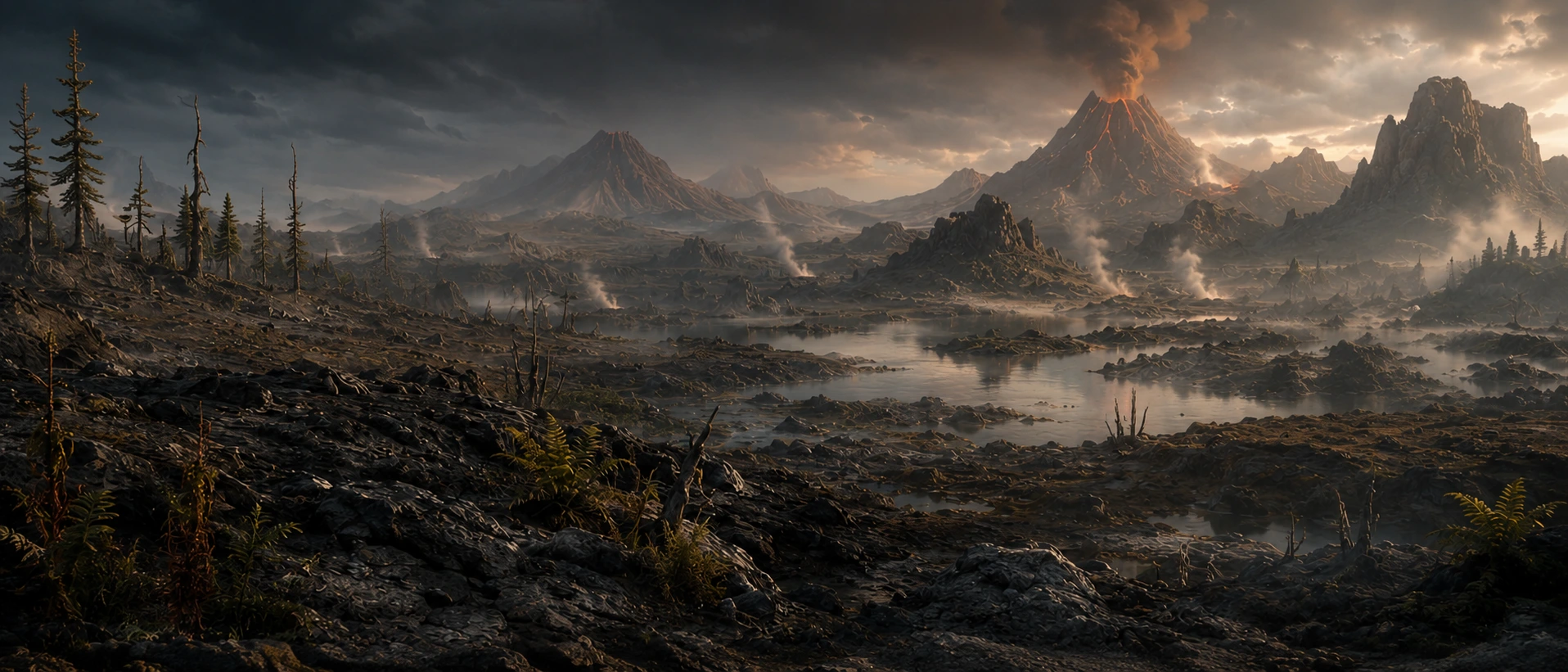
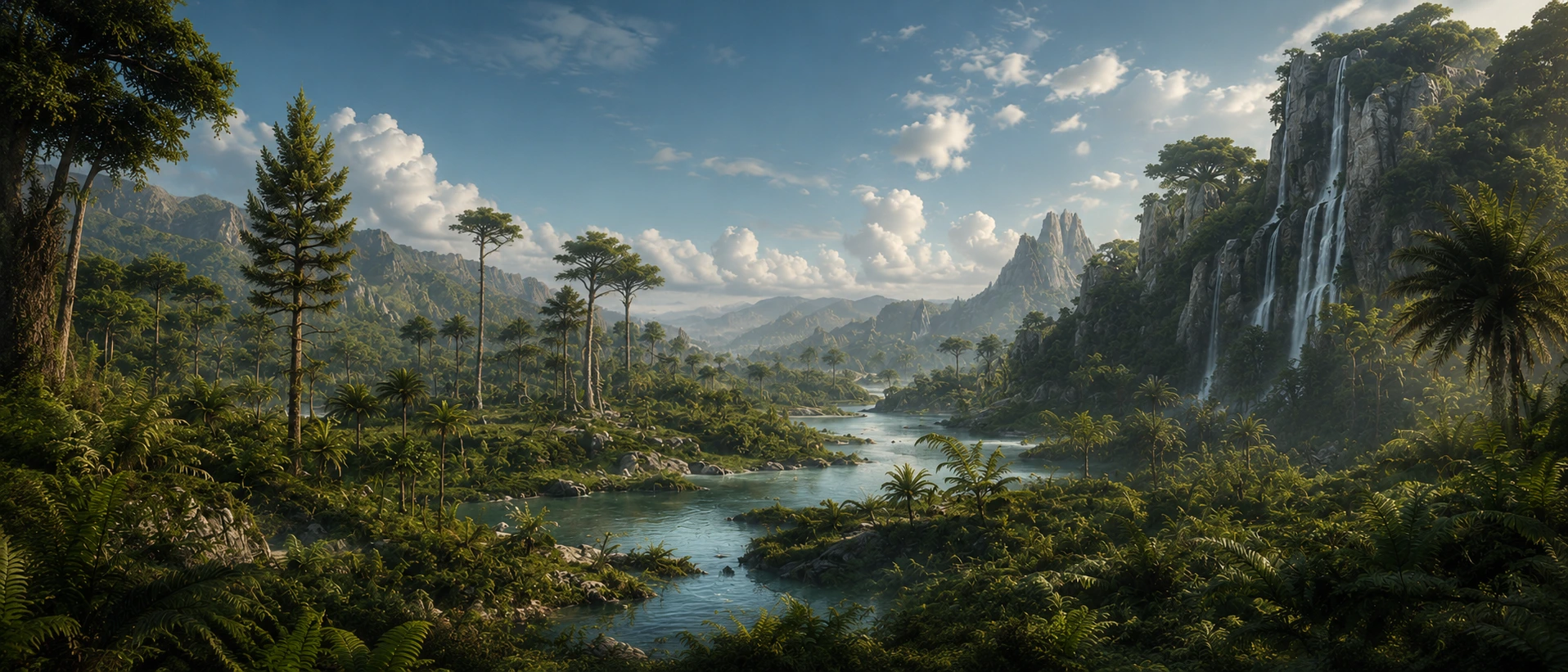
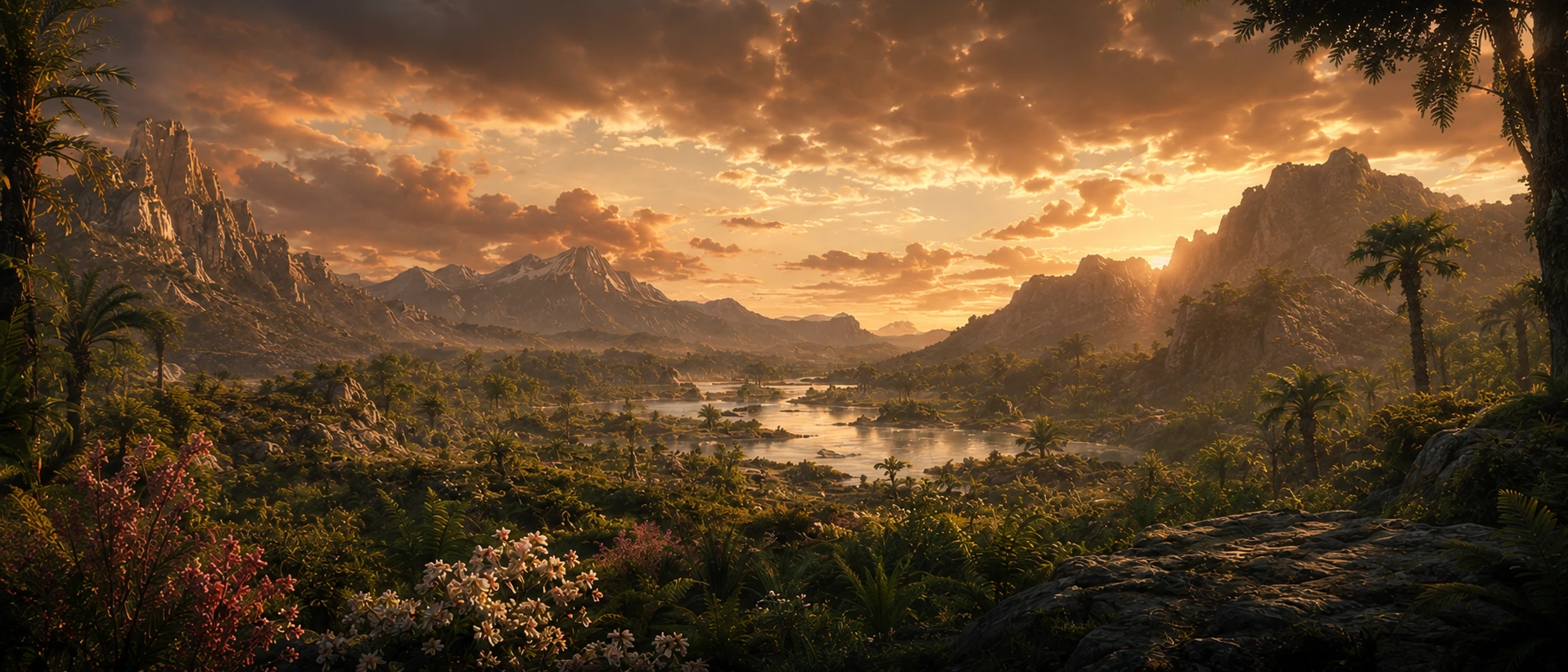
Choose an era. Then open a dinosaur field file.
Tap the numbered hotspots around the dinosaur to read its field file. Switch eras to discover the Triassic, Jurassic and Cretaceous worlds.
Geologic timeline
Late Triassic — about 203–196 million years ago.
Habitat
- Semi-arid floodplains
- Seasonal rivers and ponds
- Sparse vegetation with conifers and cycads
Fossil record
Coelophysis fossils are best known from western North America, especially the Ghost Ranch area of New Mexico.
RegionNorth AmericaDiet · role
Carnivore
- Small vertebrates
- Fast active hunting
- Sharp recurved teeth
Size scale
Up to ~3 m
Roughly the length of a small car, but built light and fast.
Key traits
- Lightweight body built for speed and agility
- Among the earliest well-known theropod dinosaurs
- Long tail helped balance quick movement
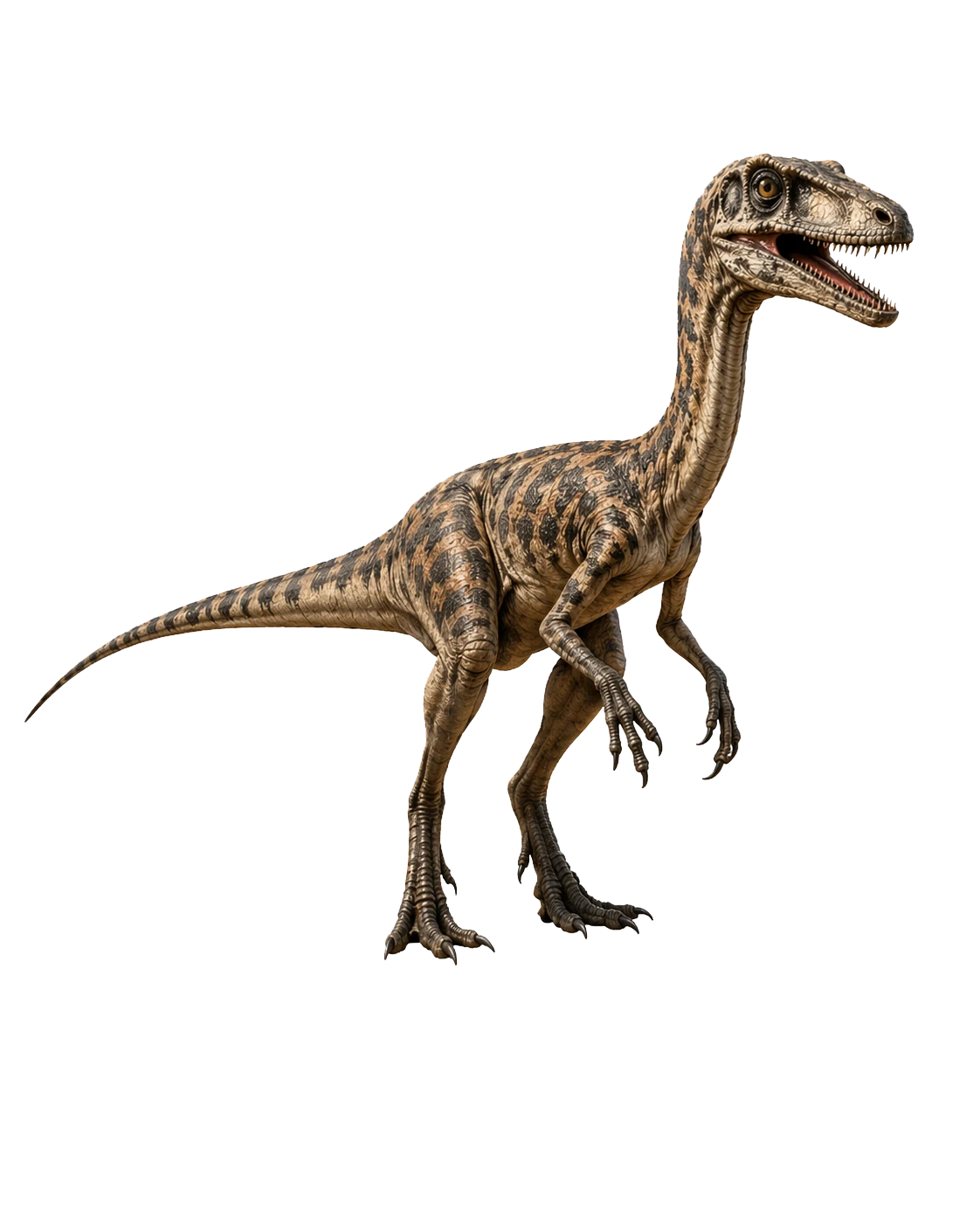
Coelophysis was one of the earliest well-known theropod dinosaurs. Small, light and fast, it lived long before the age of giant predators and helps show how dinosaur body plans began.
Among Earth’s earliest theropods
~210 million years ago
What Was the Age of Dinosaurs?
The age of dinosaurs was not a single frozen moment in prehistory. It was a long, changing chapter of Earth’s history that stretched across the Mesozoic Era, from roughly 252 million to 66 million years ago. During this time, continents moved, climates shifted, plants evolved, oceans changed, and dinosaurs rose from small early animals into some of the most successful land vertebrates ever known.
The Mesozoic Era is usually divided into three major periods: the Triassic, the Jurassic, and the Cretaceous. These names are often grouped together in popular culture, but they represent very different worlds. A dinosaur from the Late Triassic did not live in the same world as Tyrannosaurus rex. In fact, T. rex lived closer in time to humans than to some of the earliest dinosaurs.
This is one of the most important ideas behind this interactive dossier: dinosaurs did not all live together. Coelophysis, Brachiosaurus, Stegosaurus, Velociraptor, Ankylosaurus and Tyrannosaurus rex belonged to different ecosystems, different climates and different moments in deep time.
The age of dinosaurs is also not only a story about size. It is a story about adaptation. Some dinosaurs became fast hunters. Some became armored herbivores. Some grew long necks to reach high vegetation. Some developed feathers. Some evolved powerful jaws, defensive plates, tail clubs or bird-like bodies. Their diversity was the result of millions of years of ecological pressure and opportunity.
Triassic: The Beginning of the Age of Dinosaurs
The Triassic period began after the largest mass extinction in Earth’s history. Ecosystems were damaged, climates were often hot and seasonal, and the continents were joined together in a supercontinent called Pangaea. This was not yet the classic dinosaur world of giant sauropods and famous predators. It was a harsher, more experimental world.
Early dinosaurs appeared during this period, but they were not immediately dominant. Many other reptiles also competed for space, food and survival. The first dinosaurs were often relatively small, lightly built and fast-moving. They were part of a wider evolutionary landscape, not the rulers of the planet yet.
Coelophysis is a useful example of this early dinosaur body plan. It was slim, agile and carnivorous, with a lightweight build that suited active movement. It shows how early theropods began developing traits that would later appear in more famous predatory dinosaurs.
Plateosaurus represents another important Triassic direction. As an early long-necked herbivore, it helps connect the smaller beginnings of dinosaur evolution with the later rise of gigantic sauropods. It was not yet a Brachiosaurus-style giant, but it points toward that evolutionary future.
The Triassic section of this page is therefore the “origin chapter.” It explains how dinosaurs began in a world that was unstable, competitive and still recovering. The age of dinosaurs started quietly, with animals that were successful not because they were huge, but because they were adaptable.
Jurassic: When Giant Dinosaurs Changed the Landscape
The Jurassic period is where the dinosaur world begins to feel more familiar. Pangaea started to break apart, climates became more varied, and many environments supported richer plant life. Forests of conifers, cycads, ferns and other ancient plants created ecosystems where large herbivores could thrive.
This was the world of the great sauropods. Dinosaurs such as Brachiosaurus show how extreme body size became possible. A long neck, massive body and specialized feeding strategy allowed these animals to browse vegetation in ways that smaller herbivores could not. Their bodies were not simply large; they were engineered by evolution for a particular way of living.
The Jurassic was also home to armored herbivores such as Stegosaurus. Its plates and tail spikes make it one of the most recognizable dinosaurs, but they also raise scientific questions about defense, display, temperature regulation and species recognition. A dinosaur’s body was not just a shape; it was a survival strategy.
Predators such as Allosaurus occupied another side of this ecosystem. In a world with large herbivores, powerful carnivores evolved to hunt, scavenge and compete. Allosaurus was not a Tyrannosaurus rex, but it was one of the major predators of its own time.
The Jurassic also reminds us that the Mesozoic world was not only about dinosaurs. Flying reptiles such as Pterodactylus shared the skies. They were not dinosaurs, but they were part of the same prehistoric world and help make the Jurassic feel like a complete ecosystem rather than a simple list of animals.
Cretaceous: Peak Dinosaur Diversity
The Cretaceous period was the final and one of the most diverse chapters of the age of dinosaurs. By this time, continents had continued to separate, sea levels changed, climates varied across regions, and flowering plants became increasingly important in many ecosystems.
This period produced some of the most famous dinosaurs in the world. Tyrannosaurus rex lived near the very end of the Cretaceous and became one of the most powerful known land predators. Its massive skull, strong bite and robust body made it very different from earlier predators such as Allosaurus.
The Cretaceous was also home to remarkable herbivores. Ankylosaurus developed heavy armor and a tail club, showing how far defensive evolution could go. Triceratops, although not currently included in the active dossier list, represents another famous defensive strategy: horns, a frill and a powerful body built for survival in a world of large predators.
Velociraptor adds a different kind of lesson. Popular culture often imagines it as a giant reptilian monster, but the real animal was much smaller and bird-like. Evidence from related dinosaurs shows that feathered theropods were an important part of dinosaur evolution, helping connect non-avian dinosaurs with birds.
Spinosaurus shows that not all large predators followed the same model. Its unusual skull, sail and body proportions have made it one of the most debated dinosaurs, especially in discussions about aquatic or semi-aquatic lifestyles. It helps show that dinosaur diversity was not limited to land-based hunters and plant-eaters.
Quetzalcoatlus, like Pterodactylus, was not a dinosaur. It was a pterosaur. But including it in this dossier helps show the broader Mesozoic world. While dinosaurs ruled many land ecosystems, flying reptiles created another layer of prehistoric life above them.
The Day the Age of Dinosaurs Changed Forever
Around 66 million years ago, the world changed dramatically. The end-Cretaceous extinction event wiped out the non-avian dinosaurs and many other forms of life. The asteroid impact associated with Chicxulub is one of the most famous explanations for this collapse, but the story was not just one explosion. It involved fire, dust, darkness, climate disruption and ecological breakdown.
Large animals with specialized food needs were especially vulnerable when ecosystems collapsed. Plants were affected, herbivores lost food sources, predators lost prey, and food webs failed. The disappearance of non-avian dinosaurs marked the end of one of Earth’s most extraordinary evolutionary chapters.
But extinction was not total. Some lineages survived. The most important surviving dinosaur lineage is still around us today: birds. This means the age of dinosaurs did not end in the simple way many people imagine. The giant non-avian dinosaurs disappeared, but avian dinosaurs continued.
Dinosaurs Never Fully Disappeared
The legacy of dinosaurs is not only found in fossils. It is also visible in living birds, in the structure of modern ecosystems, and in the way paleontology helps us understand deep time. Dinosaurs changed how scientists think about evolution, extinction, adaptation and survival.
Fossils are not just bones in rock. They are evidence of movement, growth, injury, behavior, environment and sometimes even soft-tissue preservation. They allow scientists to reconstruct ancient worlds from fragments and patterns.
This is why the age of dinosaurs remains so powerful. It combines science with imagination, but the imagination is anchored in evidence. Every skeleton, footprint, tooth, eggshell or fossil site adds another piece to the story.
On Mindivr, this article acts as a pillar for dinosaur content. You can continue with Frozen Dinosaurs in Antarctica?, explore fossil preservation in T. rex Blood Vessels Found?, or read Where Do Dinosaurs Sleep? for a deeper look at behavior and fossil sites.
The age of dinosaurs matters because it reminds us that life is never static. Earth changes. Ecosystems rise and fall. Species adapt, vanish or transform. And sometimes, after an extinction, part of the ancient world survives in a form we see every day.
Age of Dinosaurs FAQ
What was the age of dinosaurs?
The age of dinosaurs refers mainly to the Mesozoic Era, when dinosaurs evolved, diversified and became dominant land animals across many ecosystems.
What are the three main dinosaur periods?
The three main periods are the Triassic, Jurassic and Cretaceous. Each period had different climates, continents, plants and dinosaur communities.
Did T. rex live in the Jurassic?
No. Tyrannosaurus rex lived in the Late Cretaceous, much later than the Jurassic period.
Did all dinosaurs go extinct?
No. Non-avian dinosaurs disappeared at the end of the Cretaceous, but birds survived and are considered living avian dinosaurs.
Were pterosaurs dinosaurs?
No. Pterosaurs were flying reptiles that lived alongside dinosaurs, but they were not dinosaurs themselves.
Why is the age of dinosaurs important?
It helps explain evolution, extinction, climate change, adaptation and how life can dominate Earth for millions of years before changing dramatically.
Sources and Further Reading
- Natural History Museum — dinosaur evolution, fossil education and Mesozoic life resources.
- Smithsonian Institution — dinosaur and paleontology educational resources.
- University of California Museum of Paleontology — Mesozoic Era, fossil record and paleobiology resources.
- Britannica — dinosaur periods and general reference material.