
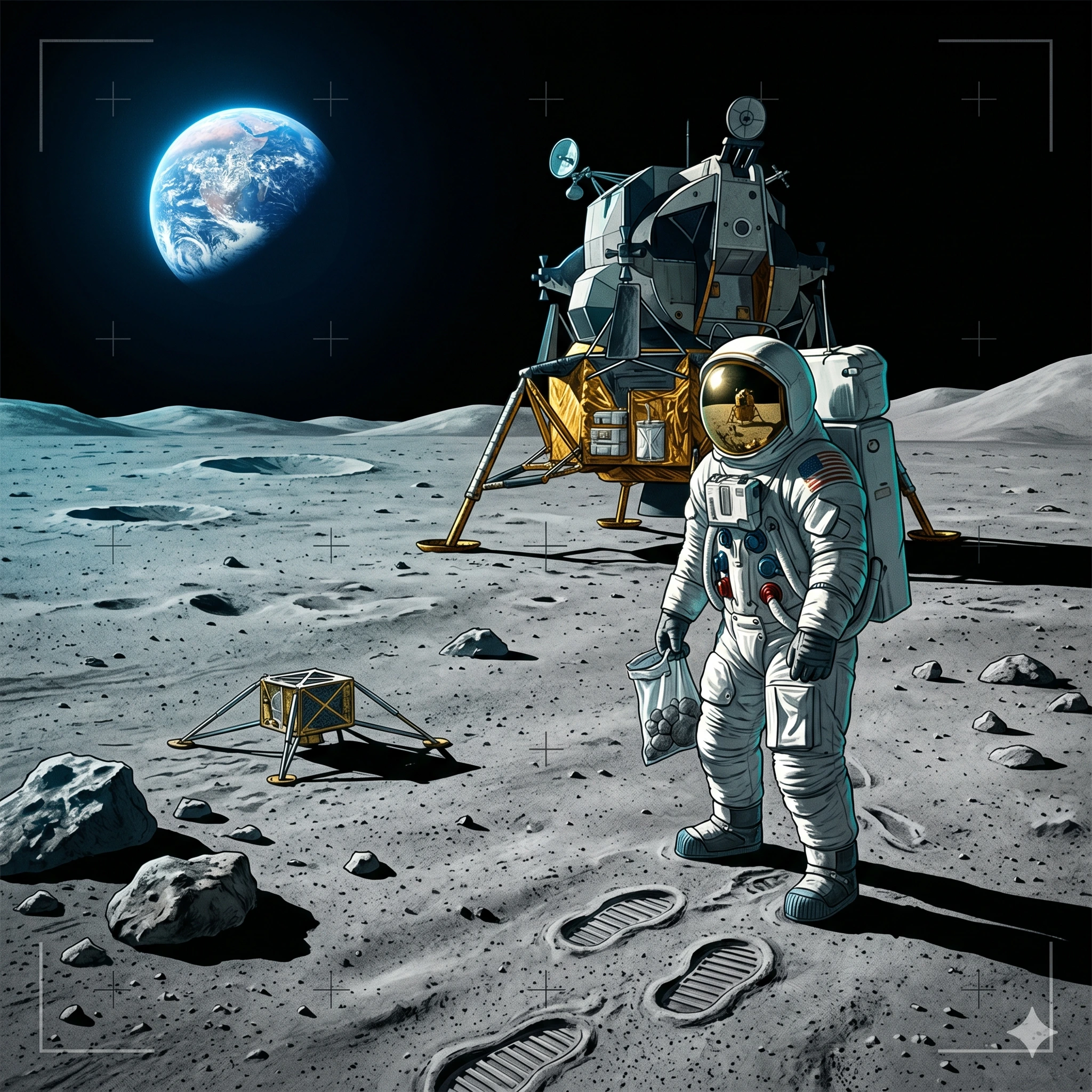
Moon landing real or fake? The evidence points clearly to real: Apollo missions left hardware on the Moon,
returned lunar rocks, were tracked by multiple systems and are still supported by modern lunar orbiter images.
The Moon landing is one of the most famous achievements in human history — and one of the most persistent targets
for conspiracy claims. The core claim is simple: maybe Apollo 11 never landed on the Moon, and maybe the footage
was staged somewhere on Earth.
It is an emotionally powerful claim because the Apollo story feels almost impossible. In 1969, humans crossed
space, landed on another world, walked on the lunar surface, collected samples and returned safely to Earth.
That sounds like science fiction. But difficulty is not evidence of fakery. Difficult engineering is still engineering.
The best way to answer “Moon landing: real or fake?” is not mockery. It is evidence. We can examine photographs,
physics, returned samples, mission tracking, retroreflectors, independent observations and modern images of Apollo
landing sites from lunar orbit.
The Moon landing was not supported by one piece of evidence. It is supported by a web of evidence:
physical samples, mission records, instruments left behind, orbital images and independent scientific checks.
A conspiracy theory often focuses on one strange-looking detail: a flag, a shadow, a missing star, a camera angle.
Science asks a broader question: does the full evidence stack point in the same direction? For Apollo, it does.
What actually happened during Apollo 11?
Apollo 11 launched from Earth in July 1969 with three astronauts: Neil Armstrong, Buzz Aldrin and Michael Collins.
Armstrong and Aldrin descended to the lunar surface in the Lunar Module Eagle, while Collins orbited the Moon in
the Command Module Columbia.
On July 20, 1969, Eagle landed in the Sea of Tranquility. Armstrong and Aldrin spent about 22 hours on the Moon’s
surface, including their moonwalk, experiments, sample collection and photography. They then launched from the surface,
rejoined Collins in lunar orbit and returned to Earth.
That story is not based only on NASA saying “trust us.” It is supported by mission telemetry, photographs, film,
radio tracking, returned samples, experiments placed on the Moon and later observations from lunar orbit.
Apollo 11 was not the only landing. Apollo 12, 14, 15, 16 and 17 also landed astronauts on the Moon. That matters
because a fake would need to explain not just one mission, but a sequence of missions, returned samples, experiments,
different landing sites and many years of scientific follow-up.
7 strong proofs the Moon landing was real
The most convincing case for the Moon landing is cumulative. No single item needs to carry the whole argument.
Instead, different types of evidence reinforce each other.
| Evidence | What it shows | Why it matters |
|---|---|---|
| Moon rocks | Apollo returned lunar samples for laboratory study. | Physical material is harder to fake than a photo. |
| Retroreflectors | Astronauts placed laser-reflecting instruments on the Moon. | Earth-based lasers can measure the Earth-Moon distance. |
| LRO images | Modern lunar orbiters photographed Apollo sites. | Hardware and surface disturbance are visible from orbit. |
| Mission telemetry | Radio and tracking data followed the spacecraft. | The mission was not just a TV broadcast. |
| Multiple missions | Six Apollo missions landed humans on the Moon. | The claim must explain a whole program, not one event. |
| Independent science | Lunar samples and data have been studied worldwide. | The evidence entered the scientific community. |
| Physics consistency | Photos and motion match lunar conditions. | Many “oddities” are expected under Moon lighting and vacuum. |
This is why the “fake Moon landing” claim is difficult to sustain scientifically. It must not only explain away
a waving-looking flag or a black sky. It must explain away rocks, tracking, instruments, orbital imagery, multiple
missions and decades of scientific analysis.
Why does the flag look like it is waving?
One of the most common Moon landing claims is that the American flag appears to wave, and therefore there must be
wind, and therefore the scene must have been filmed on Earth. This sounds persuasive until you look at how the flag
was built and handled.
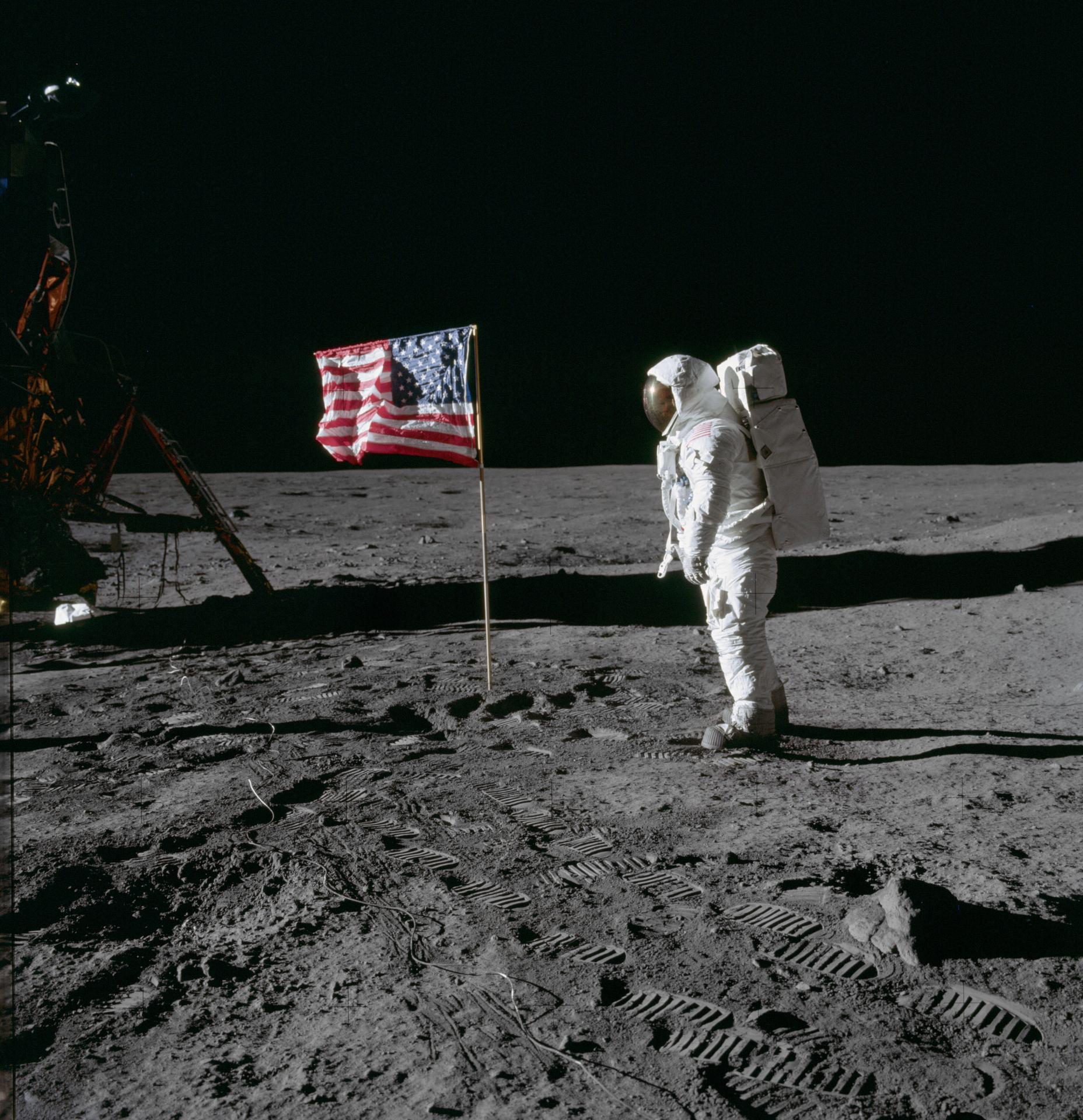
On the Moon, there is no air like Earth’s atmosphere. A normal hanging flag would simply droop. To make the flag visible,
Apollo used a horizontal support rod so the fabric would extend outward. The flag also had wrinkles and folds from being
packed tightly during the mission.
When astronauts moved or planted the flagpole, the fabric could shake. In vacuum, there is very little air resistance
to damp motion quickly, so movement can look unfamiliar. That does not require wind. It requires a disturbed object,
low damping and a support rod.
The flag did not need wind to look strange. It needed wrinkles, a support rod and motion caused by astronauts handling it.
Why are there no stars in many Moon landing photos?
Another famous claim asks: if the astronauts were really on the Moon, why do many photos show a black sky with no stars?
The answer is camera exposure, not missing space.
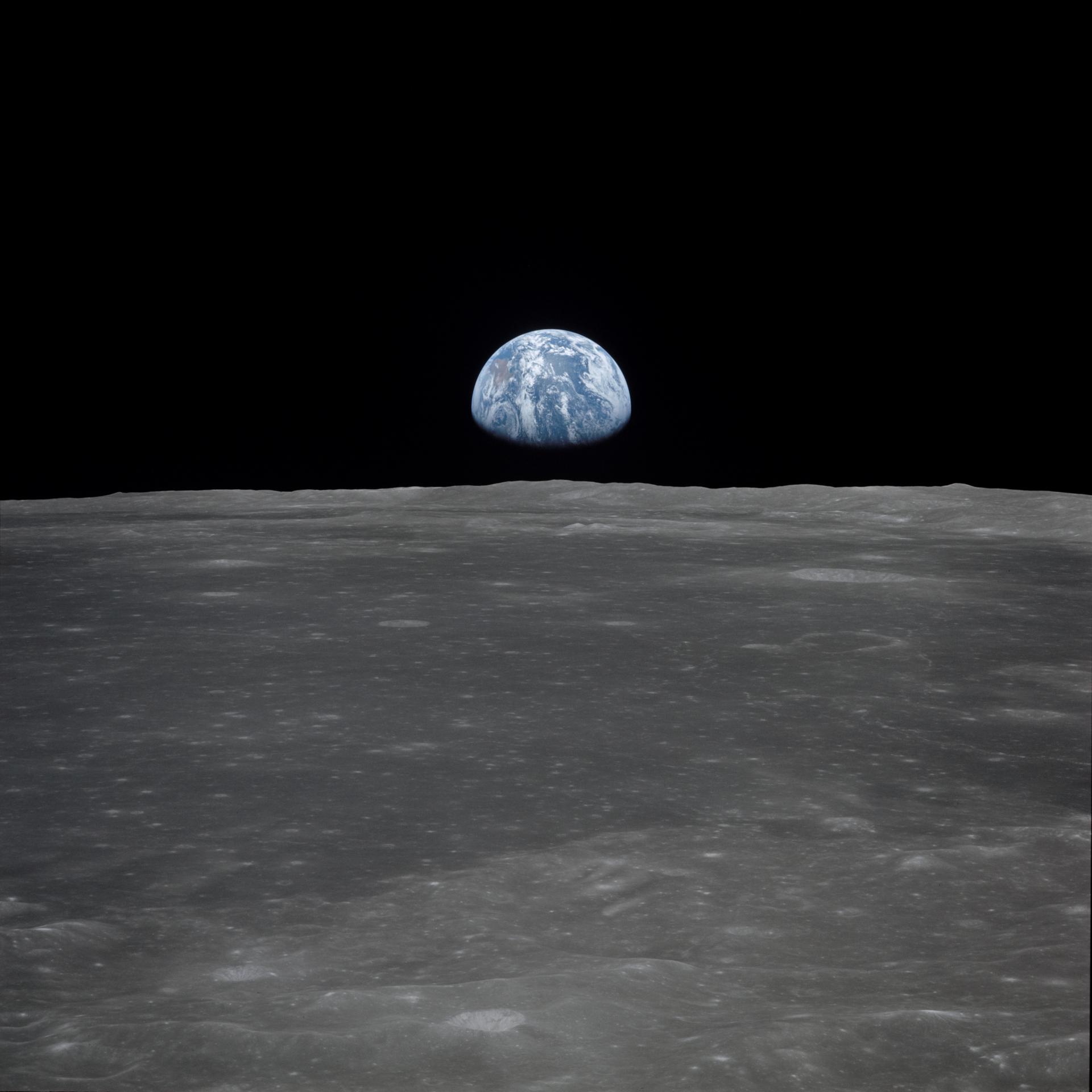
The lunar surface in direct sunlight is bright. Astronaut suits are bright. The Lunar Module is reflective. Cameras
had to be set for those bright foreground subjects. Stars are much dimmer by comparison, so with exposure settings
for the sunlit surface, faint stars do not register.
You can reproduce the principle on Earth. Take a photo of a brightly lit street at night with exposure set for the
streetlights or a lit building. Many faint stars will disappear. The camera is not proving that stars are fake.
It is prioritizing bright foreground objects.
A black sky in a photo does not mean no stars exist. It often means the camera exposure was not set to capture them.
Moon rocks and physical evidence
If the Apollo Moon landing were fake, the returned lunar samples become a major problem for the conspiracy claim.
Apollo missions brought back rocks, soil and core samples that scientists have studied for decades.
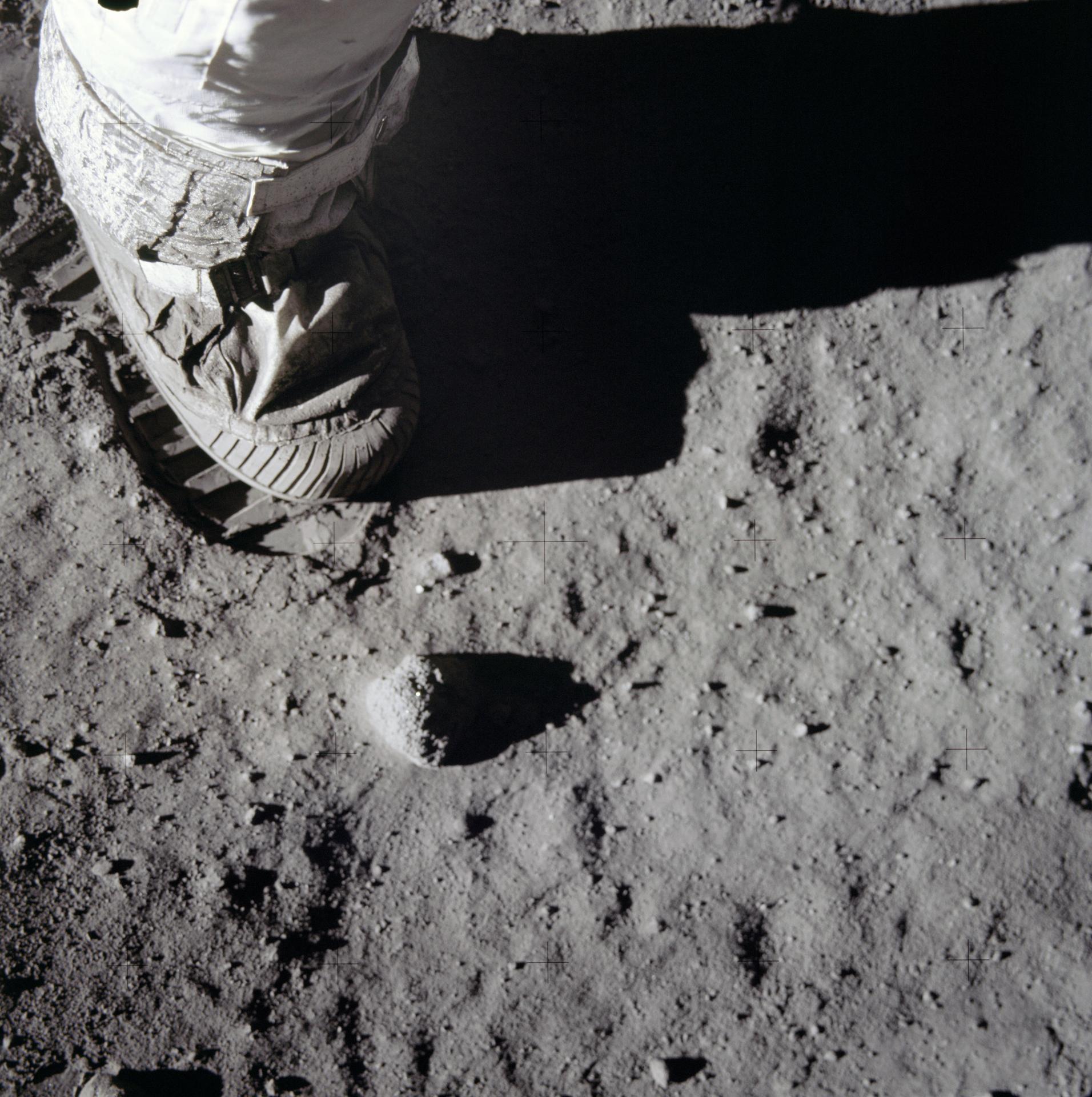
Apollo 11 alone returned 21.6 kilograms of lunar material, including rocks, fine-grained regolith and core tubes.
Later Apollo missions returned much more. These samples are not just souvenirs; they are laboratory evidence.
Moon rocks preserve information about lunar geology, impact history, volcanic activity and the Moon’s formation.
They are different from typical Earth rocks because they formed in a different environment: no atmosphere, low water
content, constant micrometeorite bombardment and long exposure to space weathering.
Conspiracy claims sometimes say the rocks could be meteorites found on Earth. But meteorites do not explain the full
Apollo sample collection, its documentation, collection context, mission photography and scientific history. The rocks
are part of a larger evidence system, not isolated objects.
Retroreflectors and laser ranging
Apollo astronauts placed retroreflectors on the Moon. A retroreflector is designed to send incoming light back toward
its source. Scientists can fire laser pulses from Earth toward these reflectors and measure the time it takes for light
to return.
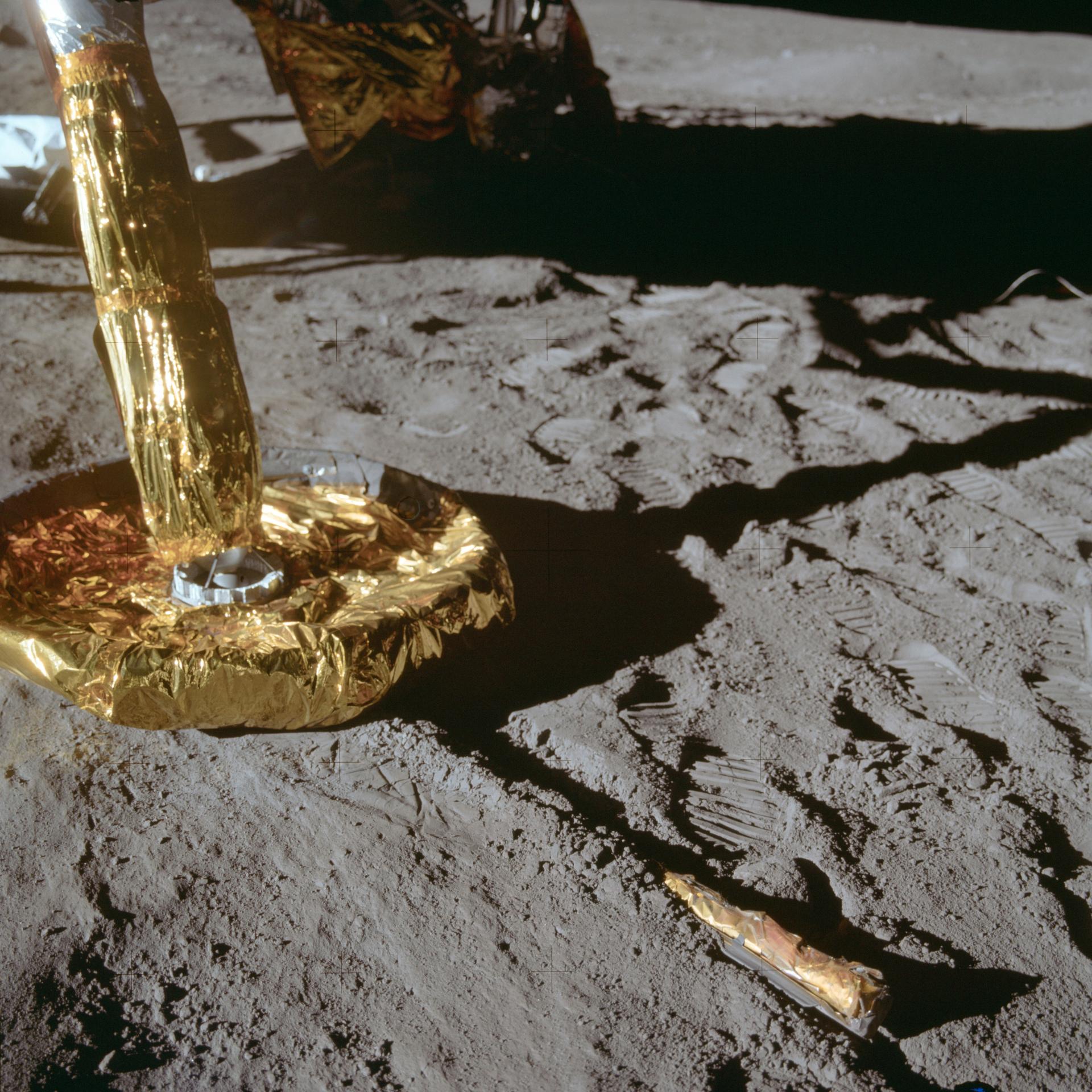
Lunar laser ranging is not a dramatic TV image. It is a precision measurement experiment. It helps scientists measure
the Earth-Moon distance, study the Moon’s motion and test aspects of gravitational physics.
Retroreflectors alone are not the entire proof of Apollo, because uncrewed missions can also place instruments on the
Moon. But in combination with Apollo mission records, sample returns, photographs, LRO images and surface documentation,
they are another strong layer in the evidence stack.
Photos
Layer 1:
Images and video show astronauts, equipment, footprints and lunar surface operations.
LRO photos of Apollo landing sites
Modern lunar orbiters have photographed Apollo landing sites from above. NASA’s Lunar Reconnaissance Orbiter captured
images of the Apollo 11 site, including the descent stage of the Eagle Lunar Module and surface disturbances left by
astronauts.
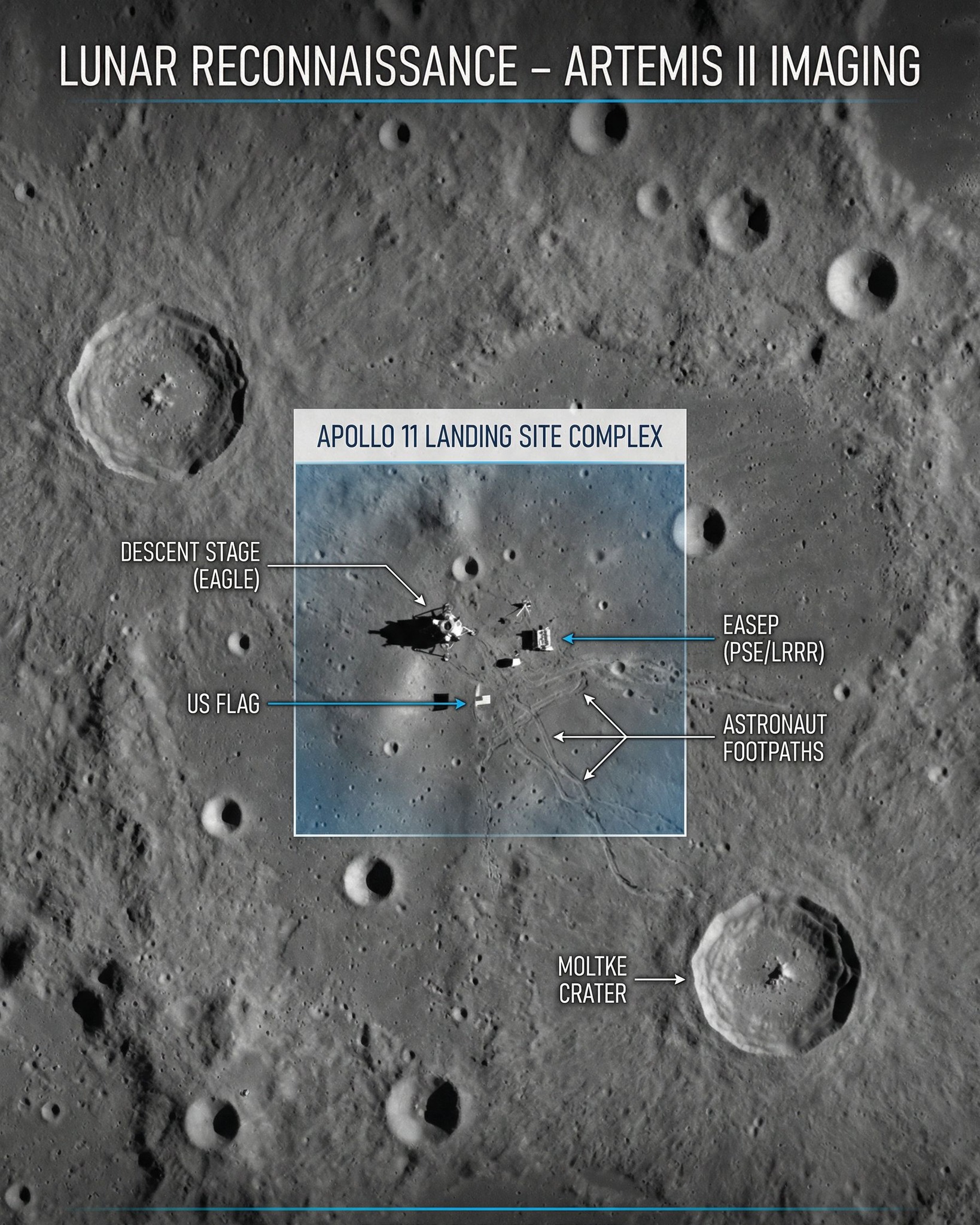
This evidence is powerful because it is later, independent in time and connected to physical locations on the Moon.
The landing sites are not abstract claims. They are coordinates with visible hardware and marks on the surface.
LRO images are not Hollywood close-ups of astronauts. They are orbital images from a spacecraft mapping the Moon.
They show artifacts at the scale expected from lunar orbit: descent stages, experiment packages, tracks and disturbed
surface paths.
The Apollo sites are not only historical records. They are physical places that later spacecraft can observe from lunar orbit.
Why conspiracy claims feel convincing
Moon landing conspiracy claims often feel convincing because they focus attention on visual surprises. The flag looks odd.
The stars are missing. Shadows look strange. The photos feel too clean. A single detail becomes emotionally powerful.
But surprising does not mean impossible. A visual detail can look strange because the Moon is strange: no thick atmosphere,
harsh sunlight, reflective dust, vacuum, unfamiliar motion and a black sky in daylight.
Good skepticism asks questions. Bad skepticism stops after the first suspicious feeling. The right question is not
“does this photo look weird?” The right question is “what explanation fits all the evidence best?”
| Claim | Better explanation |
|---|---|
| The flag waves, so there must be wind. | The flag had a support rod, wrinkles and motion from astronaut handling. |
| No stars means the photos were fake. | Camera exposure was set for bright lunar surface objects. |
| Shadows look strange. | Uneven terrain, perspective and sunlight angle can create non-intuitive shadows. |
| The whole thing was staged. | A staged claim must explain rocks, reflectors, tracking, LRO images and multiple missions. |
Conspiracy theories can also be psychologically attractive. They make the believer feel like they have found hidden knowledge.
They turn complexity into a simple story: “they lied.” But science is usually less dramatic and more demanding. It asks for
evidence that survives cross-checking.
What the Moon landing evidence teaches us
The Moon landing debate teaches something bigger than space history. It shows how evidence works. One photo can be
misunderstood. One quote can be taken out of context. One visual oddity can become viral. But strong conclusions come
from many lines of evidence that agree with each other.
Apollo’s evidence is not fragile. It includes physical samples, scientific instruments, mission data, surface images,
independent study and later orbital observations. Each piece reinforces the others.
The Moon landing was real, but the persistence of the fake claim reveals something real too: people do not only need facts.
They need explanations that make facts feel understandable. That is where science communication matters.
The Moon landing is not proven by one perfect photo. It is proven by a network of evidence that is far harder to fake than the landing itself.
So, Moon landing: real or fake? The evidence says real. The mystery is not whether humans walked on the Moon.
The deeper question is why a real achievement can still feel unreal — and how science can make extraordinary truth
easier to trust.
Knowledge check
Evidence ladder
From rumor to physical evidence
Climb from social claims to checks that do not depend on trusting a single photo.
-
Rumor
Social claimA viral assertion with no method for testing it.
-
Photo nitpick
Single anomalyOne odd-looking frame, often explained by lighting or camera settings.
-
Cross-check
Mission recordsTelemetry, tracking, and independent observatories.
-
Hardware
RetroreflectorsLaser ranging to Apollo packages still works today.
-
Matter
Lunar samplesRocks with lunar chemistry studied worldwide.
FAQ: Moon landing real or fake?
Was the Moon landing real or fake?
The Moon landing was real. Apollo missions are supported by returned lunar samples, mission tracking,
photographs, experiments left on the Moon and modern images of landing sites from lunar orbit.
Why does the flag look like it is waving?
The flag had a horizontal support rod and retained wrinkles from storage. Motion came from astronauts handling it,
not from wind.
Why are there no stars in many Moon photos?
The cameras were exposed for bright lunar daylight, spacesuits and the surface. Faint stars did not register under
those settings.
Can we see Apollo landing sites today?
Yes. NASA’s Lunar Reconnaissance Orbiter has photographed Apollo landing sites, showing hardware and surface tracks
left behind.
-
NASA Earth Observatory —
Apollo 11 Landing Site
. -
NASA Scientific Visualization Studio —
Revisiting Apollo Landing Sites
. -
Lunar and Planetary Institute —
Apollo 11 Samples
. -
NASA History —
Flag Day: Flying High, the Stars and Stripes in Space
. -
IEEE Engineering and Technology History Wiki —
Apollo 11 Lunar Laser Ranging Experiment
. -
Royal Museums Greenwich —
Moon landing conspiracy theories, debunked
. -
Institute of Physics —
How do we know that we went to the Moon?
.
Editorial note: This article was created through Mindivr’s editorial process: topic research, source review,
visual explanation design and human editing. If you spot an error, please use the contact page.
Solar System Explorer
Explore gravity, planets, orbits and your weight on other worlds.
The Edge of the Observable Universe
Why the universe has an observable horizon, but not necessarily a wall.
Black Holes Explained Without Sci-Fi
A clear visual guide to gravity, horizons and warped spacetime.
Get one science mystery and one puzzle every week.
Join Mindivr for interactive science articles, visual explanations and curiosity-first science stories.
If this article made you curious, support the next one.
Mindivr is built for premium visual science explanations. Your support helps create more interactive articles,
diagrams and science puzzles.


Join the conversation
Share a thoughtful question, correction, or insight. Keep it civil and evidence-aware.